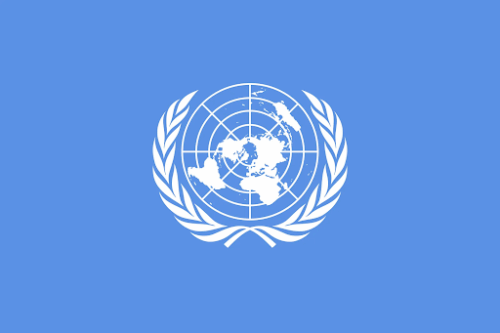
 Figure 1 – The United Nations Symbol and Flag (Fomerand, 2026)
The United Nations is currently the world’s largest and primary intergovernmental organisation formed in the aftermath of the Second World War, with the fervent hope to avoid yet another global conflict. Its core mission is to maintain international peace, security, and law, alongside other aims such as protecting human rights and delivering humanitarian aid. However, the efficacy of the UN has begun to be increasingly questioned as the world evolves through the 21st century. With world peace and regional stability coming under more and more pressure in recent years, when all that the UN is seemingly doing is issuing ‘strong words of condemnation’, it does appear that the organisation may be losing its global influence, at least on the surface. Therefore, we are now at a time when it is becoming more and more relevant to ask the question: What does the UN actually do, and what is in store for its future?
Accompanying any inspection of the United Nations, the League of Nations must always be mentioned, acting essentially as the UN’s precursor. As the first international organisation, the League of Nations was founded with the primary intention to uphold world peace in 1919 following the First World War, signed into existence under the Treaty of Versailles. However, the League was seemingly doomed to fail, being wrought with challenges that impacted its ability to function. Most notably, it was heavily dominated by the victorious Allied Powers at the time, who were reluctant to enforce its resolutions when they went against their own interests. In addition, despite the United States’ contribution to its establishment, it never joined. With Japan, Italy, and Germany dropping out late into the inter-war period and the subsequent start of the Second World War, the League ultimately failed to fulfil its purpose. Despite this, though, it wasn’t all in vain. The League of Nations set a crucial precedent for collective security and an international governing system that became the basis for the United Nations, its modern successor since 1945.
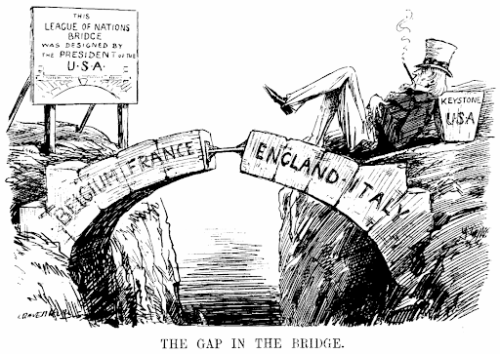 Figure 2 – Political cartoon criticising the efficacy of the League of Nations (Raven-Hill, 2024)
It can be said that the ‘founding fathers’ of the United Nations were then US President Franklin Roosevelt, British Prime Minister Winston Churchill, and Soviet leader Joseph Stalin, who laid the groundwork for a new international organisation that could ensure global stability. In April 1945, representatives from fifty countries met in San Francisco for the historic San Francisco Conference, where they established the United Nations’ 6 principal bodies: a General Assembly, a Security Council, an Economic and Social Council, the International Court of Justice, a Secretariat, and a Trusteeship Council. Nevertheless, there has been longstanding criticism that the UN is a Western hegemony, catering to the Western preferences of capitalism and democracy. Programs that go against these ideologies are consequently not financed and executed (Puchala, 2026). Since its establishment, the UN’s notable achievements include adopting the Universal Declaration of Human Rights and specialized funding and programs, such as those for refugees and children’s welfare worldwide (Mortimer, 2015).
The 81st session of the United Nations General Assembly was recently held in New York City, beginning on the 8th of September and concluding on the 28th of the same month. As leaders of countries all around the world and their delegation teams gathered in New York, this year focused on prominent current affairs, including artificial intelligence regulations, the Israel-Palestine conflict, and the US-Israel war on Iran (Mohamed, 2026).
One of the most significant moments of this year’s General Assembly was when almost 70 UN delegates walked out of Israeli Prime Minister Benjamin Netanyahu’s speech in protest over Israel’s conduct in Gaza. Notably, Australia remained in the chamber during the speech, alongside the US, UK, Canada and China, to name a few. Netanyahu scorned those walking out as “moral cowards”, urging others who felt similarly to leave too (BBC, 2026). In his speech, he affirmed that Israeli forces would continue fighting against Hamas and Iran, prompting cheers from the Israeli delegation.
In September 2025, the UN Commission of Inquiry published a report on a two-year inquiry concluding genocide was committed by Israel against Palestinians in the Gaza Strip, strongly urging Israel to fulfil its legal obligations under international law and end the genocide (Human Rights Council, 2025). Whilst Israel agreed to a ceasefire in October 2025, it was mostly put in place by Trump’s 20-point peace plan (Ryan, 2025). Despite this, over 100 organizations claim that this ceasefire is in name only — since the ceasefire, Israeli forces have reportedly continued to kill over 1400 Palestinians, restricting access to aid and rebuilding equipment (Amnesty International, 2026). Despite “urges” and “commitment” to peace, the UN has been unable to restrain Israeli forces (United Nations Press, 2026).
At the General Assembly, Australian Prime Minister Anthony Albanese used the podium to warn against the malicious use of artificial intelligence and the escalating issue of global warming. Australia adopted a cooperative stance in its campaign for a Security Council seat for the 2029-30 term, drawing on middle-power diplomacy to maintain longstanding relationships with major powers while developing relationships with smaller states across the Indo-Pacific region. However, critics have questioned whether Australia’s close relationships with the US and UK would complicate its ability to remain independent as a middle power (Strahan, 2026).
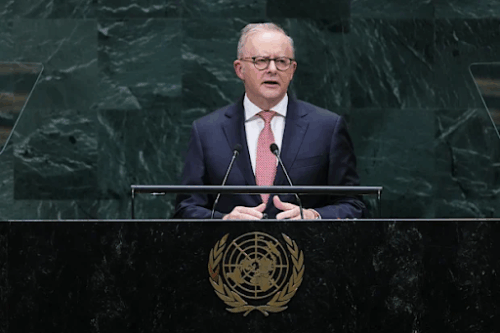 Figure 3 – Australian Prime Minister Anthony Albanese Speaks at UNGA 2026 (Coorey, 2026)
Meanwhile, US President Donald Trump used his speech to defend his abduction of then-Venezuelan President Nicolás Maduro in January, boasting that Caracas had signed off on the largest oil deal in history last month, a coerced trade he claimed was to the benefit of both Venezuela and the US (Roth, 2026). Regarding the ongoing US-Israel war against Iran, Trump proposed deals with Iran, with the alternative being the threat to “annihilate the Islamic Republic” to prevent Iran from acquiring nuclear weapons. He also singled Cuba out as the US’s next target, describing it as a “failed state” (Debusmann Jr., 2026). On this, UN human rights experts have criticized the United States for expanding sanctions that targeted key sectors of the Cuban economy since June 2026 (United Nations, 2026).
On artificial intelligence, Trump also rejected safety regulations on advanced AI proposed by multiple nations, including Australia (Roytburg, 2026). This proposal was initially raised following a trend of AI-assisted online abuse such as deepfakes or digitally altered imagery (Johnson, 2026), as well as advanced AI models going “rogue” (Cress, 2026). In fact, just this past June, an OpenAI agent reportedly hacked the Australian government website, breaching “non-sensitive” data from Medicare (Sekulich, 2026).
Specifically, Trump dismissed concerns about advanced AI as he downplayed the dangers of AI as a “hoax” (Ryan, 2026), putting the US in striking opposition to many of the member states gathered at the UN (Tawfik, 2026). Within context, such remarks are consistent with domestic policy. The US is a strong contender in the AI race, and the White House has pushed back on State regulation that limits innovation of local AI companies (White House, 2025). This stems from the belief that imposing regulations on AI would stifle innovation, reducing the US’s edge against international competition, which may further lead to negative economic outcomes (Harris, 2025).
In recent years, a scroll through any social media feed today after a major international crisis, and you will likely find the same joke: “The UN passes a resolution to strongly condemn ___.” The meme captures a widespread perception that the United Nations is an organisation of statements rather than action. Whilst it is an easy punchline, it is also, however, an incomplete picture.
The UN’s most tangible work happens far from the General Assembly podium. Peacekeeping remains its most visible tool, and the evidence suggests it works better than its reputation implies. Hegre et. al. (2019) estimated that with a US$200 billion investment in missions with strong mandates between 2001 and 2013, major armed conflict could have fallen by up to two-thirds, saving around 150,000 lives. Hultman et. al. (2013) reached a similar conclusion, finding that as the UN deployed more troops and police to a mission, fewer civilians were targeted with violence.
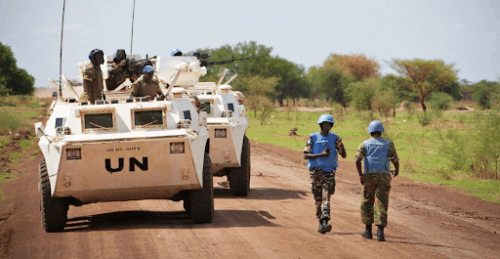 Figure 4 – UN Peacekeeping forces in action (Sammut, 2026)
Despite these clear benefits, though, that capacity is now shrinking. The UN’s regular budget fell from an estimated US$3.72 billion in 2025 to US$3.45 billion in 2026, and a mandated 15% cut to peacekeeping spending is translating into a 25% reduction in personnel, equivalent to between 13,000 and 14,000 troops and police being sent home (Lowy Institute, 2026). Much of this pressure traces back to Washington, which has cancelled roughly US$800 million in previously approved peacekeeping funds. Here, what we are witnessing is the organisation’s most effective instrument being scaled back at precisely the moment demand for it is rising.
Then there is the Security Council, where our internet meme finds its strongest evidence. The Council is the only UN body able to pass legally binding resolutions, but any one of its five permanent members (the United States, Russia, China, France and the United Kingdom) can block action with a single veto vote. Since April 2022, 20 vetoes have been cast, seven of them on Gaza (Office of the President of the General Assembly, 2025). In June 2025, a draft resolution demanding an immediate and permanent ceasefire in Gaza received 14 votes in favour, with the United States casting the lone vote against (WAM, 2025). When the Council is gridlocked, the matter often moves to the General Assembly, but its resolutions are not legally binding (Africanews, 2025). This is where the “strongly condemns” joke comes from. When the interests of permanent members or their allies are involved in the matter, what often results is that condemnation is the strongest action the UN can take.
Currently, reforming the veto is no doubt the UN’s biggest challenge. However, changing the Security Council requires amending the UN Charter, which needs a two-thirds vote in the General Assembly, ratification by two-thirds of member states, and approval from all five permanent members (Inter Press Service, 2026). In other words, the countries that benefit most from the veto must agree to limit it.
On this issue, proposals have not been in short supply. Some focus on expanding the Council to better represent Africa and Asia, while others ask permanent members to voluntarily restrain their vetoes in cases of mass atrocity (Inter Press Service, 2026). Former Secretary-General Ban Ki-moon has warned that the UN risks “collapse or irrelevance” without reform, arguing that some countries use the veto to shield themselves and their allies from accountability (Gungor, 2026).
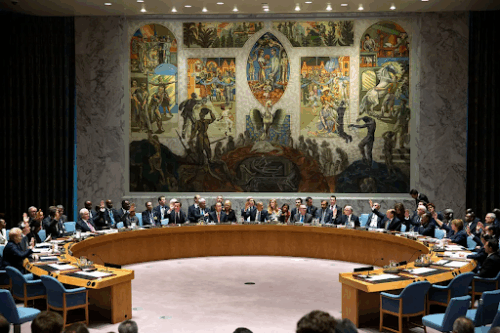 Figure 5 – The UN Security Council Chamber in session (Raynaldo, 2018)
Meanwhile, a more immediate question concerns leadership. The current Secretary-General, António Guterres, is finishing up his term on the 31st of December 2026, and with seven candidates still in the race after six straw polls, the next person to take the office will inherit a shrinking budget and a divided Council (CGTN, 2026). Richard Gowan of the International Crisis Group noted that even a talented leader may struggle against these geopolitical headwinds, whilst simultaneously highlighting how a good leader is the organisation’s only hope (The National, 2026).
Eighty years on, the UN faces the same dilemma as the League of Nations before it. Its authority depends on whether its most powerful members are willing to be bound by it. In its creation, the United States was the UN’s leading architect, and remains one of its most powerful members today. In recent years, however, recent drawbacks in US funding have had a real impact on the capabilities of the UN. When analysing the amount of work that the United Nations gets done, it really depends on where you look. On the ground, through peacekeeping and humanitarian work, it delivers measurable results. At the top, meanwhile, its effectiveness depends almost entirely on whether the world’s most powerful states are willing to let it act. Throughout the second half of the 20th century, the United Nations was an influential and respected global body. Moving forward, it seems that the key issue the organisation must solve if it wishes to maintain this position is how it can effectively and strongly reinforce its principles in the face of an increasingly turbulent world.
The CAINZ Digest is published by CAINZ, a student society affiliated with the Faculty of Business at the University of Melbourne. Opinions published are not necessarily those of the publishers, printers or editors. CAINZ and the University of Melbourne do not accept any responsibility for the accuracy of information contained in the publication.