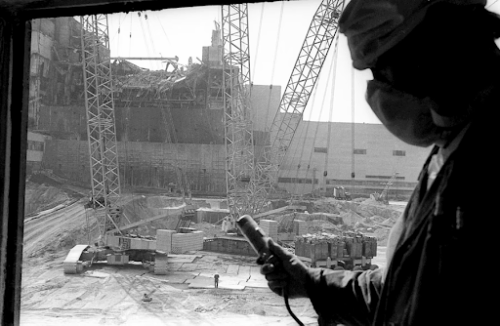
 Figure 1 – The Chernobyl nuclear disaster was riddled with politics and secrecy.
The date is April 26th, 1986, and while the small city of Pripyat in the Ukrainian SSR sleeps peacefully through the dead of night, a long-overdue safety test at the nearby nuclear power plant was quickly developing into a critical situation. As reactor number 4 began to experience a catastrophic power surge exceeding its usual operating level by more than 10 times, the nuclear engineers in the control room quickly resorted to their final fail-safe method: the AZ-5 shutdown button. However, instead of the power level stabilising, two massive explosions quickly followed that ripped apart the entire nuclear reactor, shooting a pillar of blue glow into the night sky as toxic radiation quickly began to spread and descend all over Europe. The nuclear power plant in question here is the Chernobyl Nuclear Power Plant of Vladimir Lenin.
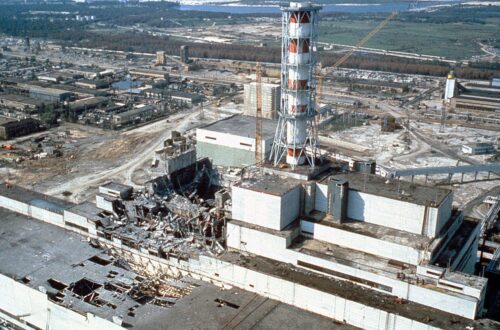 Figure 2 – Aftermath of the Chernobyl nuclear power plant following the explosion
What those in the Kremlin and the control room didn’t know at the time was that they were now dealing with the worst nuclear disaster in human history. Overall, the Chernobyl nuclear disaster ended up spewing a level of radiation estimated to be up to 400 times the amount released from the bomb dropped on Hiroshima. However, while society typically gets caught up in the ‘fantasification’ of Chernobyl, depicting an abandoned nuclear wasteland with mutated wildlife, a major factor as to why this permanent scar on the Earth formed and got so deep in the first place is often overlooked completely. Here, the role that the Soviet government played both leading up to the disaster as well as its response afterwards was nothing short of damning. At the cost of human lives, legitimate efforts to mitigate and clean up were corrupted by an emphasis on secrecy and pushing forward the Soviet political agenda.
The Chernobyl nuclear disaster occurred at a time when Soviet leader Mikhail Gorbachev was attempting to reform the Soviet Union through policies such as glasnost and perestroika. Specifically, glasnost focused on creating more openness within the government so that information could be better communicated with the public, whilst perestroika focused on restructuring the national economy and political system. Strikingly, Chernobyl exposed the contradictory nature of the government, which went against these newly implemented policies immediately following the explosion.
From the beginning, the emphasis was not on evacuation but on maintaining the status quo and restricting the spread of information. Meanwhile, the few details released focused on downplaying the explosion. As dozens of people began to fall ill due to radiation poisoning by the next morning, the nearby city of Pripyat remained in the dark as to what had occurred. Alongside this, as the nuclear power plant was run by authorities in Moscow, the government of the Ukrainian SSR also did not receive prompt information regarding the accident. Notably, the extent of information released to local authorities included a note regarding there having been a fire, which was extinguished without further issue. Eventually, the city of Pripyat was evacuated only in the afternoon of the following day, on the 27th of April, after over 36 hours of radiation had already descended upon them.
What is especially representative of the overall Soviet government mentality in its response to Chernobyl would be the sobering fact that it required international detection of high radiation before they were finally willing to release an official acknowledgement of the accident. This international detection came from a nuclear power plant in Sweden, which picked up a dangerous surge in radioactivity on the morning of the 28th of April, to which an official news broadcast from Moscow was subsequently aired that night, announcing the situation. The Soviet leadership had delayed notifying the world until it was impossible to deny. However, they refused to cancel the annual International Workers’ Day parades on May 1st, where festivities went ahead throughout the Soviet Union, from Moscow to Kyiv, located only approximately 130 km from Chernobyl, which is still spewing radiation into the air. This clearly displays the priority that Moscow put on maintaining their political agenda and propaganda, all while still attempting to downplay the seriousness of the disaster. Here, Moscow demands the optics of a unified and thriving nation at the cost of human lives.
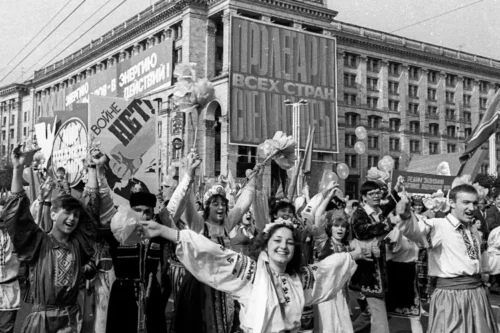 Figure 3 – May Day parades in Kyiv in 1986
Meanwhile, this theme of downplaying the seriousness of the situation at Chernobyl persisted throughout the cleanup and containment phase of the response as well. Throughout the months following the initial explosion, Soviet leadership would consistently soft-pedal the radiation levels that were being released, even to foreign nations offering assistance. During the clearing of debris from the reactor hall roof of the power plant, extremely radioactive graphic material was scattered everywhere with the potential to give a human a fatal dose in just 90 seconds. Emitting radiation at 20,000 roentgens per hour, this meant that using even the Soviet lunar rovers used to clear debris from other areas of the building would be impossible here. Thus, Moscow accepted West Germany’s offer of assistance in sending over one of their superior robots, dubbed “Joker”, to get the job done. However, Joker’s power circuits were fried almost immediately by the radiation exposure. This was because the Soviets, in telling West Germany the radiation levels at Chernobyl, understated the number by 10-fold, resulting in the robot being exposed to over 600% more radiation than it could handle. This absolutely highlights the ideological hubris of the Soviet Union at the time, with the official position being that state-engineered and socialist nuclear technology is infallible, and thus, such a catastrophic nuclear disaster was not possible.
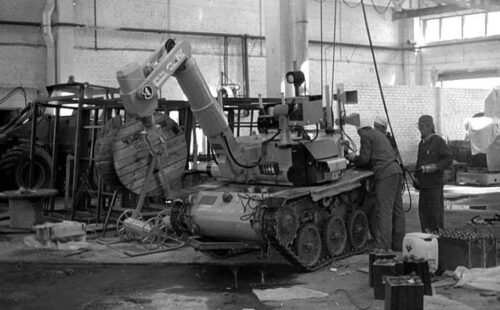 Figure 4 – West German robot “Joker” arriving at Chernobyl
Meanwhile, what quickly became a major discussion point following the Chernobyl nuclear disaster centred around what actually caused the explosion. Specifically, why did the reactor explode immediately after the nuclear engineers pressed the kill switch that was meant to shut down the reactor completely? The nuclear power plant in Chernobyl used an RBMK reactor, which at the time was championed as a remarkable feat of nuclear engineering that was incredibly safe and efficient. On this, Anatoly Aleksandrov, president of the Soviet Academy of Sciences and head of the Kurchatov Institute, even claimed that the RBMK reactor is “no more dangerous than a samovar” in the 1970s. However, what the nuclear engineers operating the reactors at the time didn’t know was that the RBMK design actually contained many flaws.
One of the most significant of these flaws is known as the “positive scram effect”. In relation to the aforementioned AZ-5 button, this was meant to be the lifeboat that stabilised the reactor from power surges such as the one experienced at Chernobyl. In pressing AZ-5, all the boron neutron-absorbing control rods of the nuclear reactor will immediately be inserted to kill the reaction, and thus reduce power. However, these control rods came with a deadly design flaw: the tips were actually made of graphite, a highly radioactive material that increases reactivity. Therefore, this means that reactivity and thus power will actually surge momentarily as control rods are being inserted due to the displacement the graphite creates, completely contrary to the AZ-5 button’s purpose. With control rods taking roughly 20 seconds to be fully inserted into a nuclear reactor, such a brief increase in reactivity proved to be too much for the nuclear reactor to handle at Chernobyl.
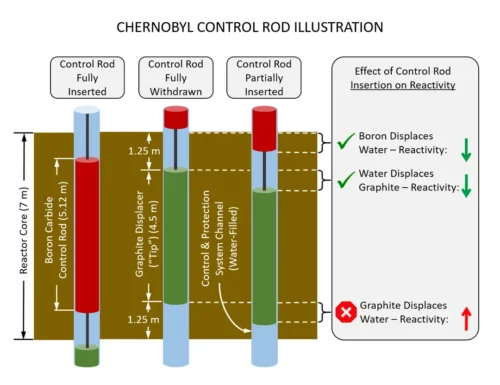 Figure 5 – RBMK Control Rod Graphic
What is shocking about this ‘positive scram effect’, would be how whilst top management and government officials knew about this design flaw, it was not made aware to the nuclear engineers operating RBMK reactors. Indeed, such a transitory power surge was already observed at an RBMK nuclear power plant in Ignalina in 1983, but this issue failed to be notified to the nuclear scientific community, being lost in the bureaucratic and secretive nature of the Soviet system. No one updated the operating procedures or training to account for the ‘positive scram effect’. Thus, whilst a lack of safety culture and flawed training protocols no doubt also played a key role in the explosion, no one running the Chernobyl nuclear power plant that night knew that in pressing their final fail-safe, they were actually pulling the trigger to unleash the catastrophe.
The reason why there was such a lack of effort made by the Soviet government in spreading details of this design flaw is purely political. One of the primary justifications behind graphite being used in the design of the control rods was cost savings, and this was certainly not consistent with the political image and agenda that the Soviet Union wanted to project to the world. Thus, they conveniently hid it behind their curtain of bureaucracy, protecting the image of socialism through taking on a risk that actualised into the Chernobyl nuclear disaster.
Overall, Chernobyl had deep implications for both the Soviet Union and the entirety of Europe. The radiation from the destroyed reactor spread across the continent, which created much wider knock-on effects that reached beyond the health dimension, including travel and agriculture. Specifically, the Belarusian and Ukrainian SSRs were the most heavily impacted, where the Soviets initially established an exclusion zone spanning a 30KM radius around Chernobyl, which was forcibly evacuated and placed under military control. Since then, Ukraine has altered the zone borders to cover an area today of approximately 2600 square KM, where public access and habitation are still restricted.
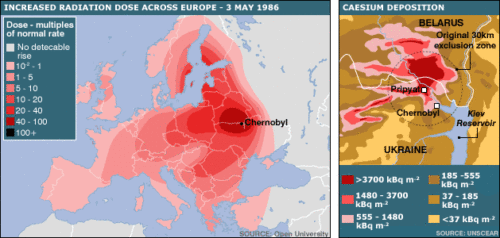 Figure 6 – The levels of radiation spread from Chernobyl
Today, whilst the radiation levels near Chernobyl have dropped considerably, some areas continue to be heavily contaminated by radioactive isotopes such as Cesium-137, strontium-90, and plutonium-241. This is further indicated by the presence of increased mutation rates, lower fertility, and increased rates of tumors and other developmental abnormalities amongst organisms present. As a result, experts have provided a vast range of estimates as to when the area surrounding Chernobyl, including the reactor site itself, will be fully habitable again, ranging from 3,000 to 20,000 years, according to a 2016 report.
Meanwhile, there has also been a proven growth in the diagnosis of thyroid cancers in Belarus, Russia, and Ukraine, primarily amongst children, which have been directly linked to the absorption of high doses of radiation from Chernobyl. Overall, it is estimated that out of the approximately 830,000 liquidators sent in to clean the area during the cleanup phase, around 120,000 had died due to radiation-related causes by 2005. However, despite this, the official death toll recognised by the Soviet Union, and later Ukraine, remains at a lowly figure of just 31.
As for the implications on the Soviet state, Chernobyl acted as a dramatic blockade to the fulfilment of the previously mentioned glasnost and perestroika policies and revealed the hypocrisy of a government that immediately receded from these ideas. Glasnost was the promise of the removal of secrecy from the government-public relationship, whilst Perestroika was the promise of better economic conditions for people by moving away from socialist policies. Yet, the government kept silent about the lethal design flaws of the RBMK reactor and the damage that occurred despite the fatal consequences this would have, which was done based on the government’s motivation to put economic benefits and strong political messaging above the well-being of their people. Here, Gorbachev’s policies were nothing but false promises that Chernobyl has come to markedly symbolise.
This apparent unwillingness of the Soviet government to comply with its own newly introduced reforms was very evident, and it was not long before the public came to recognise the contradictory and hypocritical nature of their government, which led to widespread distrust in the government amongst Soviet citizens. Alongside this, both the costs associated with the cleanup and the messaging of Chernobyl also contributed to the eventual downfall of the Soviet Union because of the destruction it caused to an already failing economic system. Notably, this idea is even reinforced by Gorbachev himself, stating that the Chernobyl nuclear disaster “was perhaps the real cause of the collapse of the Soviet Union”.
To conclude, the politics and secrecy involved with the catastrophe must not be overlooked. Whilst the scientific and storytelling behind what happened at Chernobyl is rightfully discussed heavily, we must also highlight how much of the accident also had to do with the way in which Soviet leaders acted. In terms of factors both leading up to the explosion on that night, as well as how the disaster response effort played out, the politics and secrecy of the government interfered throughout to contribute to the infliction of such a deep and permanent scar upon the Earth. However, such conduct accordingly came with its consequences, not just for the innocent population of Europe that had to suffer adverse health effects, especially in countries neighbouring the nuclear power plant, but also directly upon the state itself. Perhaps the now-abandoned city of Pripyat acts as both a good representation of what became of the Soviet Union as a result, as well as an ominous warning of the consequences that hiding secrets behind a political agenda rather than minimising the risks of catastrophe can deliver.
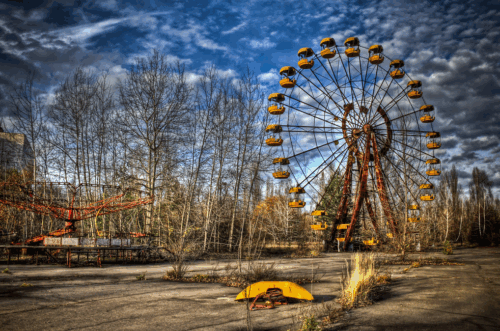 Figure 7 – The nearby city of Pripyat remains abandoned to this day
The CAINZ Digest is published by CAINZ, a student society affiliated with the Faculty of Business at the University of Melbourne. Opinions published are not necessarily those of the publishers, printers or editors. CAINZ and the University of Melbourne do not accept any responsibility for the accuracy of information contained in the publication.