In urban economics, gentrification refers to the transformation of neighbourhoods caused by increased investment and an influx of wealthy/middle-class residents that eventually leads to the displacement of long-term, minority communities. This narrative, while inequitable, governs the global market for cultural aesthetics. A mamianqun, a Ming Dynasty pleated skirt with six centuries of provenance, is reissued as a “hallmark Dior silhouette” at US$3,800. A Buddhist tea ritual carried from Tang-era China to Japan is repackaged as a $9 lavender oat milk matcha latte. Mahjong, played in Chinese households since as early as the 1800s, is rebranded by three American founders for “jaunty gals playing this civilised game with a wink”.
While the cultural commentary is clear, the economic implications of these are less frequently named. Commercial cultural appropriation, at its core, is a transfer of value that severs an aesthetic from its origin community, repackaged by a firm with a goal of monetising it, and reselling it at a premium that flows into shareholders’ pockets. This results in a structural arbitrage—a legal margin in which extraction is condoned. The argument, then, is not that cross-cultural exchange is inherently extractive, but that the absence of proper attribution renders the culture indistinguishable from the product, making the latter quietly displace the former.
Cultural Appropriation Is Not New
The cultural appropriation of Asian traditions is neither new nor uncommon. Western brands are notorious for taking cultural elements, stripping their ethnic context, and repackaging them at a costly premium for unknowing consumers to purchase. We see this pattern time and time again across industries and locations — from fashion, to food, to entertainment, and even to health and wellness spaces.
Take for instance The Mahjong Line, a brand founded in November 2020 with a primary vision of giving mahjong, a tile-based game originating from China, an American revamp. Over time, cultural traditions can evolve and may be reshaped as trends emerge — however, the brand quickly drew sharp criticism because it was founded by 3 white women, outsiders to the culture, who positioned themselves as the visionaries for the innovation (Garcia-Navarro, 2021). On their website, the company used openly colonist terms such as “modernized” and “refreshed” when describing their creative direction behind the game, and even described The Mahjong Line as “for jaunty gals playing this civilized game with a wink” (Ouyang, 2021). The seemingly ignorant reimagination of a symbolic cultural game played since the 1800s (Yang, 2018), coupled with the careless promotional language used, proved to be a blatant example of mainstream America’s disregard for learning about and acknowledging the nuances of Asian history.
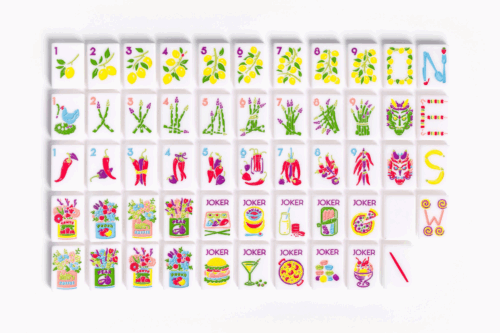
Figure 1: ‘The Foodie Line’ by The Mahjong Line. Source: The Mahjong Line
Another piece of Asian culture that has been stripped of cultural context and meaning is yoga, which has been rebranded and commodified as a trendy power workout by the West. With over 300 million practitioners globally, yoga is a massive industry, boasting a worth of $16 billion yearly spend in the US alone (Mora et. al, 2019). Yoga’s origins lie in the Indus Valley Civilization in India 2,500 years ago, a deeply-rooted Hindu practice (Deshpande, 2017). Classical yoga is based on the sage Patanjali’s eight limbs philosophy, which promotes living in a moral way (Gilani, 2023). However, the yoga we see in modern day media often portrays Western women with no apparent cultural connection to or understanding of the religion and symbolic meaning behind it. Puppy yoga — where customers get to do yoga with various species of dogs alongside them — has even become a trend, with classes at around A$79 in Melbourne (Pawra Yoga, 2026). Stripped of its original philosophy and spiritual essence, modern yoga has become a luxury commodity, effectively excluding the majority of society who could benefit from its teachings — such as low-income households, the elderly, and disabled people.
Gentrification is not exclusive to any category of business. High fashion houses, even those that are highly reputable and respected in the industry, are also guilty of claiming historical Asian designs as their own. One of the most notable cases is Dior, which released a US$3,800 pleated skirt as part of their Fall 2022 collection under the creative director at the time, Maria Grazia Chiuri (Cheung, 2022). Described as a “hallmark Dior silhouette”, social media users quickly spotted the striking resemblance of the Dior skirt to a mamianqun, a type of Hanfu (Chinese historical clothing) worn in the Ming Dynasty (Cheung, 2022). This promptly led to not only a slew of criticism from Chinese netizens and state media outlets, who accused the brand of failing to credit the alleged inspiration behind the design, but also protests urging Dior to stop cultural appropriation outside one of their Parisian boutiques (Holland, 2022). Although the item was later removed for purchase on their website, Dior was unable to undo the offense it caused to the Chinese community by rebranding a traditional garment and erasing centuries of Chinese craftsmanship. With China’s luxury market valued at approximately US$57 billion annually (Sgueglia, 2024), Dior’s appropriation of the mamianqun reveals a stark imbalance — Chinese consumers are welcomed as buyers, but Chinese culture is neither credited nor respected as a source.
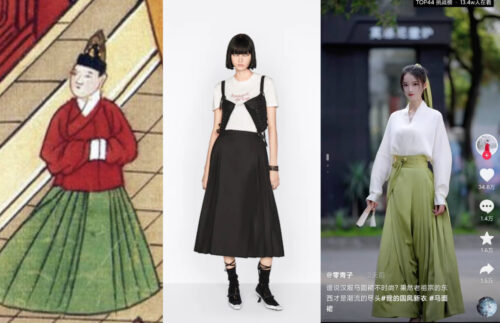
Figure 2: Dior’s skirt in comparison to the mamianqun. Source: The China Project
Dior’s case is far from isolated. Across the fashion industry, South Asian garments have faced the same fate. According to the research by Varsha Yajman (2025), fast fashion brand Oh Polly posted a TikTok of its new “Galia convertible gown”—a baby pink bejeweled bodice with matching pleated wide leg trousers. The comments section was flooded with South Asian users pointing out the obvious: that was a shara, a traditional South Asian garment worn for generations, repackaged and sold to Western consumers under a made-up name. Even though Oh Polly acknowledged the backlash, replying to comments that the brand would “ be more mindful in ensuring that cultural elements are honored with respect in our designs moving forward”. The acknowledgement came, but the accountability did not. Two weeks later, the campaign and its tiktok videos remained live, their sales platform still listing the garment with no reference to its TikTok videos remained live, their sales platforms still listing the dress with no reference to its South Asian origins.

Figure 3: Oh Polly accused of rebranding South Asian Fashion. Source: Pedestrian.tv
Beyond fashion, the commodification of Eastern culture by Western brands has also entered food and beverage culture. Nowhere is this more visible than in the global matcha boom. Matcha’s roots stretch back nearly a thousand years, originating in the Tang Dynasty in China, carried to Japan in the 12th century by Buddhist monks, where it became the foundation of chado- the Japanese tea ceremony. A ritual built on mindfulness and centuries of tradition. (Hubert, 2025). Today, that tradition is being sold back to consumers as a $9 lavender oat milk latte. With the rise in demand, the authenticity that comes with commemorating their history of Matcha has become commodified, and its cultural significance is now less often recognised or appreciated.( Opinion Writer, 2025), Most ritual implements and Matcha meaning are being abandoned: some western influences are abandoning traditional tea whisks ( bamboo whisks) and tea bowls ( ritual bowls), mocking and ignoring matcha’s cultural origins for profit.(Cushing, 2025) The consequences of this practice go far beyond disrespect and also result in material loss. The japanese tea ceremony has been reimagined as a “ superfood” in Western-centric media, with its antioxidant value and health benefits heavily promoted while the labor of its producers, cultural rituals, and historical context are being ignored. The matcha shouldn’t only be a pale green beverage in a disposable cup, it’s more than just an aesthetic choice. It’s a tangible manifestation of culture being reduced to a color and a trend.(Şahin & Şahin, 2025)
The economic ramifications of misappropriation
The harm doesn’t stop at bad PR. When Dior sold a $3,800 skirt derived from a Ming Dynasty garment, the profit went entirely to a fashion house in France. Not to the artisans. Not to the historians. Not to the communities that had preserved these traditions for centuries.
That’s not an isolated incident, it’s the structure. The global yoga industry, rooted in Hindu philosophy over 2500 years old, generates more than $16 billion in annual spending in the United States alone (Mora et al., 2018). While India sees almost none of it.
Currently, there exists no law requiring them to share it. However, the absence of an international agreement on the protection of traditional cultural expressions represents a major structural gap in international law. Brands that profit from cultural heritage face no obligation to seek consent, provide credit, or share revenue. In this case extraction isn’t just possible, it’s permitted.
The psychological cost is much harder to quantify, but data still does exist. Asian-Americans who have hidden their heritage, cultural designs, religious practices and even clothing from non-Asians are nearly twice as likely to have been called offensive names by strangers as those who have not (Ruiz & Kuo, 2023). These are people who purposely hid markers of their identity to avoid discrimination, then watched those same markers get celebrated on western trends and runways, rebranded and sold at a premium. Patterns for this are consistent: culture clothing is only deemed “chic” once removed from the bodies of its origin communities and placed onto a typically western one (RepresentASIAN Project, 2025). Souzeina Mushtaq, assistant professor of journalism and gender studies at the University of Wisconsin, puts it plainly: “Cultural appropriation and the rise of anti-South Asian racism are basically two sides of the same coin.” (RepresentASIAN Project, 2025).
Between 2019 and 2022, hate crimes against South Asians in Canada rose by 143%. A quarter of South Asian Canadians reported experiencing discrimination in just 2022 (RepresentASIAN Project, 2025). When elements of culture are detached from their origins, their complexity is also detached. Yoga becomes a luxurious workout. Mahjong becomes a brunch aesthetic. A centuries-old skirt becomes, in Dior’s words, a “hallmark silhouette.” Rather than cultural exchange, these shifts represent a one-way transaction behind the facade of a prosperous partnership.
The Price of a Borrowed Aesthetic
Ultimately, what distinguishes cultural exchange from cultural gentrification is not aesthetic resemblance, but also and more importantly, the direction of economic flow. Exchange implies reciprocity, attribution, and some redistribution of the value created, whereas gentrification implies extraction and exploitation. Across each of the cases examined, a striking pattern emerges—Western firms capture the upside of cultural cachet while origin communities absorb the downside, whether through erasure, ridicule, or an uptick in discrimination attached to the same aesthetic worn by its originators.
Corporate apology cycles, increasingly conducted on TikTok comment sections, are no longer corrective. Rather, they have become a marketing reflex. Oh Polly’s pledge to “be more mindful” cost the brand nothing and changed nothing—the campaign remained live and the product stayed on the shelves. So long as the financial incentive to misappropriate continues to outweigh the reputational costs of doing so, contrition will remain a PR expense instead of a proper structural intervention.
The CAINZ Digest is published by CAINZ, a student society affiliated with the Faculty of Business at the University of Melbourne. Opinions published are not necessarily those of the publishers, printers or editors. CAINZ and the University of Melbourne do not accept any responsibility for the accuracy of information contained in the publication.