Melbourne is often celebrated as one of the world’s most liveable cities. Less celebrated is its position at the top of the Oasis Index, which measures the cost of five beers and two packs of cigarettes in cities around the world. At $111.20, Melbourne’s total is more than double that of Oslo, ranked tenth at $53.40. The city’s lofty position is largely the result of Australia’s aggressive taxation of alcohol and nicotine products. But as legal cigarette sales decline and black market trade surges, the effectiveness of these taxes is increasingly being questioned. Recent calls from One Nation to reduce the nicotine excise have reignited debate over whether Australia’s tax on tobacco has gone too far.
Cutting the tobacco excise has gone from a fringe idea to a major political debate. In August 2026, One Nation announced a plan to cut the tobacco excise by 75 per cent and freeze indexation for three years. The coalition went further with an 80 percent cut, paired with a $200 million police crackdown on the illegal tobacco network. Its package would also legalise, regulate and tax vape and nicotine pouches for adults.
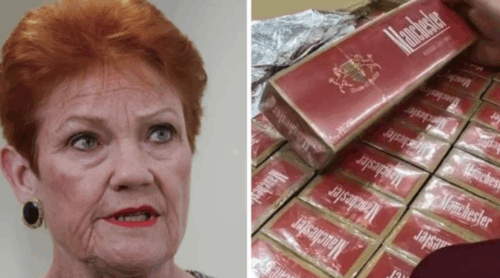
Both parties argue that legal cigarettes can’t compete on price, so the excise has to come down. One Nation’s Barnaby Joyce says the government is letting money flow to the “mafia” through cheap illegal products that legitimate sellers can’t compete with. Opposition Leader Angus Taylor says the plan would take away the gangs’ price advantage, their customers and their profits. To support the idea, Coalition Senator Jonno Duniam points to Canada, which raised tobacco taxes through the1980s, then slashed them in 1994 after a rise in crime. However, the Coalition has not modelled how its cut would affect smoking rates.
Opposition to the plans is broad. Labor argues that any excise cut would only benefit big tobacco companies, and Treasurer Jim Chalmers rejected calls to cut it, saying the government remind focused on compliance. The Greens also attacked the idea, with leader Larissa Waters accusing Pauline Hanson of pushing the tobacco lobby’s agenda. Health advocates have also rejected the calls. The picture isn’t completely clear-cut, though. Prime Minister Anthony Albanese has declined to guarantee the government won’t cut the levy, and Nationals leader Matt Canavan says the Coalition is open to cutting it but called One Nation’s version a “ thought bubble”. The debate turns on a trade-off. Supporters see lower prices as the quickest way to undercut organised crime, while critics warn cheaper cigarettes could push smoking rates up and hand tobacco companies a windfall. Without modelling the health impact, the central question remains unanswered: would a lower excise shrink the black market, or simply grow the legal one?
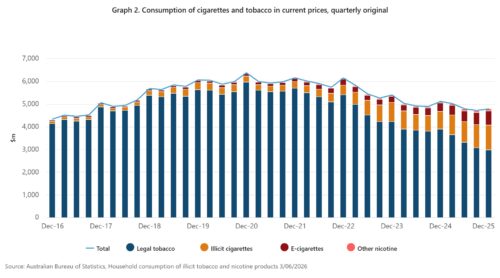
Figure 2: Consumption of cigarettes and tobacco in current prices
Australia’s tobacco market has undergone a dramatic transformation in the last decade. According to the Australian Bureau of Statistics, in 2016 approximately 87% of tobacco consumed in Australia came from legal sources. As of December 2025 legal tobacco consumption makes up only 15% of total nicotine consumption. These figures are based on wastewater analysis rather than direct tracking of every cigarette sale, however the trend is clear. As tobacco excise taxes have steadily increased each year has caused the gap between the price of legal tobacco to far outpace illicit prices. With smokers seeking cheap alternatives increasingly switching to cheaper and easily accessible illicit tobacco.
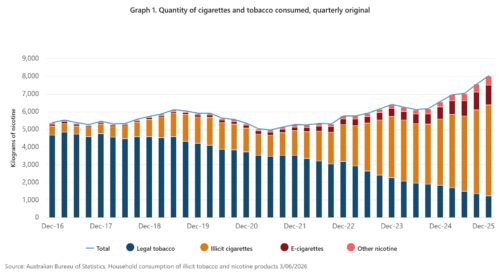
Figure 3: Quantity of cigarettes and tobacco consumed
Enforcement
At first glance the solution to Australia’s illicit tobacco problem appears straightforward: crack down on the retailers selling illegal products. However, the criminal network handling the sale of illicit tobacco is far more than a handful of smokeshops. Most of the illegal trade is directly linked to organised crime, providing criminal organisations with opportunities to launder money and evade taxes while often facing lower penalties when caught compared to other black-market trades.
Supporters of stronger enforcement argue that the government has not done enough to crack down on these stores. Yet seizure data shows that enforcement activity has increased significantly in the last decade. In 2016-17 478T of tobacco was seized. By 2024-25 that figure had risen to 2,244T. Despite these record seizures, the black market has continued to expand, suggesting that enforcement alone isn’t enough to eliminate demand. Queensland has been cited as evidence that enforcement can work. Following the introduction of stronger enforcement measures, legal tobacco sales in the state remained 40 percent above previous levels for six months after implementation. Later reports however noted that many sales had left convenience stores and moved to the streets with meet ups organised online.
While the black market may seem difficult to enforce, parliament has been enacting significant policy around it. Most recently in October 2025 the Illicit Tobacco National Disruption Group (ITNDG) was established to disrupt mid-level criminals that import and distribute tobacco within communities. Furthermore in August 2026 the Combatting Illicit Tobacco Bill 2026 was passed to increase penalties for dealing in illicit tobacco as well as enhancing law enforcement power by expanding digital search & seizure powers. Despite tougher enforcement policies, Australia’s black market continues to grow, challenging existing taxation policies.
Peaking in 2019-20, the tobacco excise was one of the greatest earners for the federal government, having earned them around $16.3B. This number continues to plummet, with the expected revenue in 2029-30, to be around $2.14B, just 10 years later.
This revenue hasn’t disappeared so much as changed hands. Over the past 2 years over $365M has been spent by the Albanese government, with the goal to shut down the illegal tobacco market. Yet, the illegal tobacco market continues to grow. Including vapes, pouches and other nicotine products alongside cigarettes, the black market represented 80% of all nicotine products consumed within Australia. Even if only tobacco is taken into account, the black market still contributed to over 50% of sales.
With the price gap in mind, the black market’s control is hardly a surprise. The cost of a 20-pack of cigarettes has risen to above $40, whereas a black market pack can be found for less than $15.
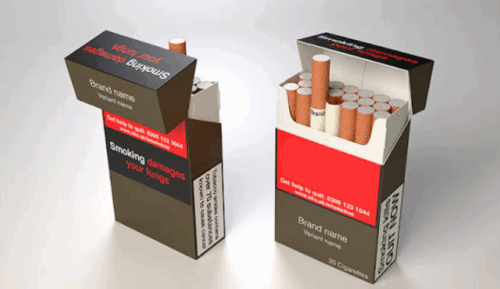
Figure 7 – A legal pack of cigarettes costs over $40 vs under $15 in comparison to an illegal one
The Coalition and One Nation are adamant that the solution is a slash to the tobacco excise. The 80% excise cut proposed by the Coalition would see the excise reduce to just over $6 from around $30. To back this plan, they also plan to implement a ‘$200 million nationwide law enforcement surge.’ Citing PBO modelling, this would generate over $8B in the first four years, and more than $20B over a decade. This would see the price of a 20-pack of cigarettes fall to $16-26 assuming retailers pass on the full cut. One Nation’s 75% excise cut has reported similar results, with a 20-pack of cigarettes estimated to fall to $21-22.
However, these estimates are far from definite. Health Minister Mark Butler argues that even without any excise tax, illegal tobacco would still cost less. Hence, the increase in revenue could be less significant. This would also likely be accompanied by smoking becoming more popular not only in general but particularly within price conscious groups, such as young people and disadvantaged groups.
The Coalition and One Nation’s proposed 80% and 75% cuts to the excise tax are a gamble, but not cutting the excise tax is just as much of a gamble. The government can either watch as excise revenue continues to fall whilst the black market gains more and more control, or implement a plan that has the potential to be effective in regaining excise revenue. However, this also has the potential to put Australia’s most vulnerable groups at risk of becoming hooked on tobacco.
References:
https://www.abc.net.au/news/2026-08-18/hanson-one-nation-cut-tobacco-cigarette-tax/107048678
https://region.com.au/one-nation-has-plans-to-stub-out-the-illicit-tobacco-trade/990579/
https://www.abs.gov.au/articles/household-consumption-illicit-tobacco-and-nicotine-products
https://www.itec.gov.au/sites/default/files/2025-12/ITEC_Commissioner-Report_2024-25.pdf
https://www.sbs.com.au/news/article/illegal-tobacco-boom-qld-data-crackdown/w74nhd87m
The CAINZ Digest is published by CAINZ, a student society affiliated with the Faculty of Business at the University of Melbourne. Opinions published are not necessarily those of the publishers, printers or editors. CAINZ and the University of Melbourne do not accept any responsibility for the accuracy of information contained in the publication.