
Figure 1: Palantir made a historic step into the Australian retail sector by partnering with Coles in early 2024.
For most of history, surveillance technology stayed where it was built: in warzones and intelligence bunkers. However, that line may be slowly dissolving. The same data structure that once served for military logistics is now being assigned to a more mundane task: rostering supermarket staff and tracking stock in each aisle before each opening. That shift arrived in 2024, when grocery giant Coles signed a deal with Palantir – a company known for its work with the CIA and ICE rather than retail. 20 million weekly transactions now feed into the same kind of system designed to track people, not products. What this partnership actually involves, and what it says about where big data is heading next, is worth unpacking.
Palantir was founded in 2003, by PayPal co-founder Peter Thiel alongside Alex Karp, Joe Lonsdale and Stephen Cohen. The founder’s original vision was to adapt data analysis technology originally developed for PayPal’s fraud detection into a large-scale platform, helping government agencies analyse datasets, particularly for anti-terrorism efforts.The company was named after the “seeing stones” (Palantiri) in The Lord Of The Rings, symbolising the company’s intent to reveal hidden patterns across large amounts of data.
Figure 2: Two of Palantir’s founders, Alex Karp (left) and Peter Thiel (right)
Palantir’s operations sit on two main software platforms. Gotham, the original platform, is widely used by defence and intelligence agencies to generate operational insights, which include classified missions. Meanwhile, Foundry is the company’s main commercial platform, acting as a central operating system that lets companies break down information and data into a single framework.
In recent years, Palantir has evolved from a company known for military intelligence into a supplier of AI-powered data analytics tools for a mix of government and commercial clients. As a result of this increased applicability revenue has grown at roughly a 30% compound annual rate since 2018, and the company reached profitability in 2023, and has exploded into a $420 billion corporate giant.
That growth hasn’t come without controversy, and it’s worth understanding before looking at what Coles has signed up for. In 2025, ICE granted Palantir a $30 million contract to develop “ImmigrationOS,” a system designed to streamline identification and apprehension of individuals prioritised for removal, track and report self-deportations, and improve the efficiency of deportation logistics, which is part of a broader ICE shift toward consolidating surveillance capabilities into larger platforms. Critics argue that the efficiency ImmigrationOS is designed to deliver is inseparable from the risk that, once datasets are fused into a single system for enforcement, the original boundaries around that data’s intended use tend to disappear. The pushback has been substantial: more than 230,000 people in the UK have signed petitions demanding their government terminate all contracts with Palantir, citing the company’s role in immigration enforcement and the handling of health data.
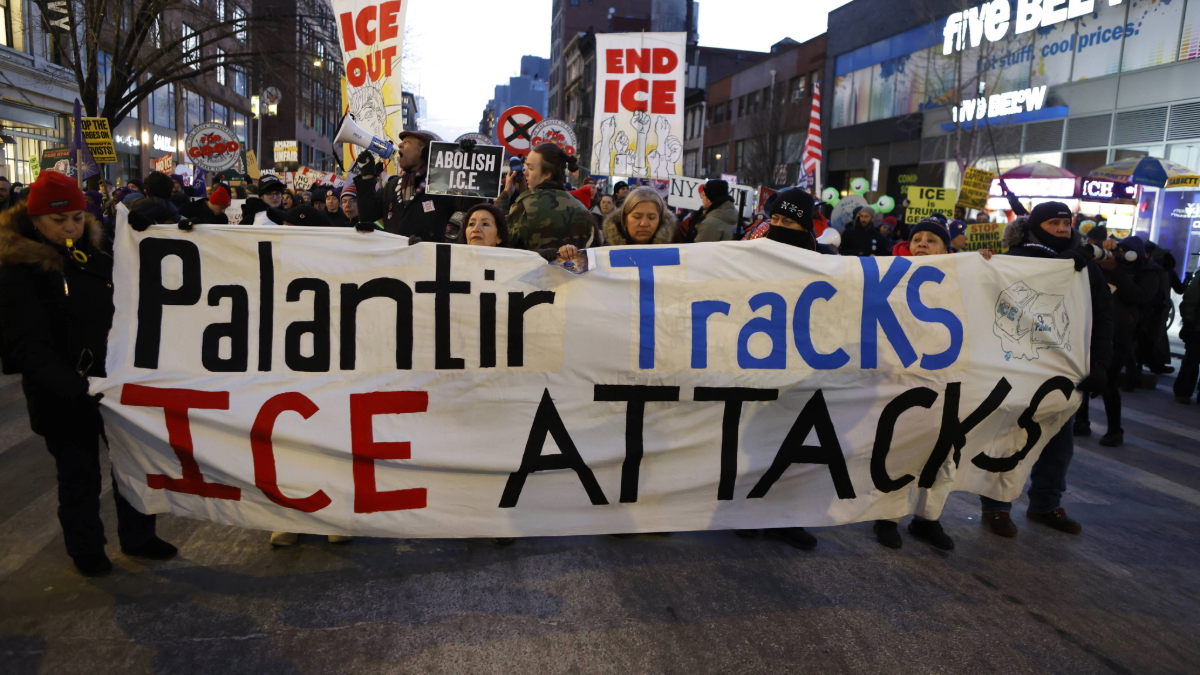
Figure 3: Protests in New York that took place days after massive ICE crackdown in Minneapolis
At the same time, Palantir’s résumé outside the intelligence world is longer than most people realise. In the UK, the National Health Service (NHS) signed a $31.5 million deal during the pandemic, using Foundry to track outbreaks, allocate vaccines and route patients to hospitals with capacity. In Brazil, retailer C&A used the same platform to smooth its supply chain, catching stock-outs on bestsellers before they happened. Domestically, the company already sits inside AUSTRAC’s financial-crime monitoring, Rio Tinto’s operations, and Westpac’s systems — a footprint that predates Coles by years and shows retail was never really a stretch for Palantir, just a new label on familiar plumbing.

Figure 4: Palantir’s operational flowchart: one system linking data, models and day-to-day decisions, now applied across Coles’ supermarket network.
Coles made that jump official in February 2024, signing a three-year contract to run Foundry and Palantir’s AI Platform across more than 840 stores nationwide. The scale is deliberately staggering: roughly 10 billion rows of data, refreshed daily, covering every store, shift and staff member in the network. On paper, it’s a workforce tool, covering rostering, shift efficiency, spend visibility — slotted into Coles’ broader plan to strip out $1 billion in costs over four years. Store and department managers get real-time dashboards instead of static reports; leadership gets a single system linking head office to the shop floor. Palantir has since pointed to the deal publicly, crediting it with measurable gains in staff retention and morale.
What makes Coles notable in Palantir’s own history isn’t really the technology, but rather the buyer. It’s one of the company’s first serious commercial footholds in Asia-Pacific retail, a sector Palantir has spent two decades circling but rarely landed. The bet, from Palantir’s side, is that a tool built to track terror cells and optimise military logistics translates just as cleanly to rostering checkout staff — and Coles is their best of how far that bet and future ventures in Australia pay off.
Increasingly so, the discussion around the strategic partnership between Coles and Palantir fundamentally revolves around the uncertainty attributed to what consumer data is being collected, stored and processed, and, more importantly, who can access such information. From a business perspective the motives behind the shift of retailers towards big data partnerships is simple; an attempt to not only thwart the widespread retail crime costing an estimated $9 billion a year for 70% of retailers 2025, but also a means for better analyzing consumers’ tastes to sell products more efficiently. Woolworths’ $223 million acquisition of data company Quantium in 2021 is a clear example of the extent that massive retailers have gone to transition to a more data-driven strategy.
What isn’t quite as clear, however, is the perceived growth of consumer surveillance methods within stores. Similar retailers such as Kmart and Bunnings have been under investigation by the Office of the Australian Information Commissioner (OAIC) for blatantly using facial recognition tracking in their stores since 2023, with Woolworths once again further employing AI in many of their roughly 62 cameras in each store. Self-checkouts in particular employ AI heavily to deter shoplifters by constantly tracking each item as it is scanned and bagged However these systems have been shown to be inaccurate at times, with many customers alarmed when faced with the occasional false accusation of not scanning an item or two.
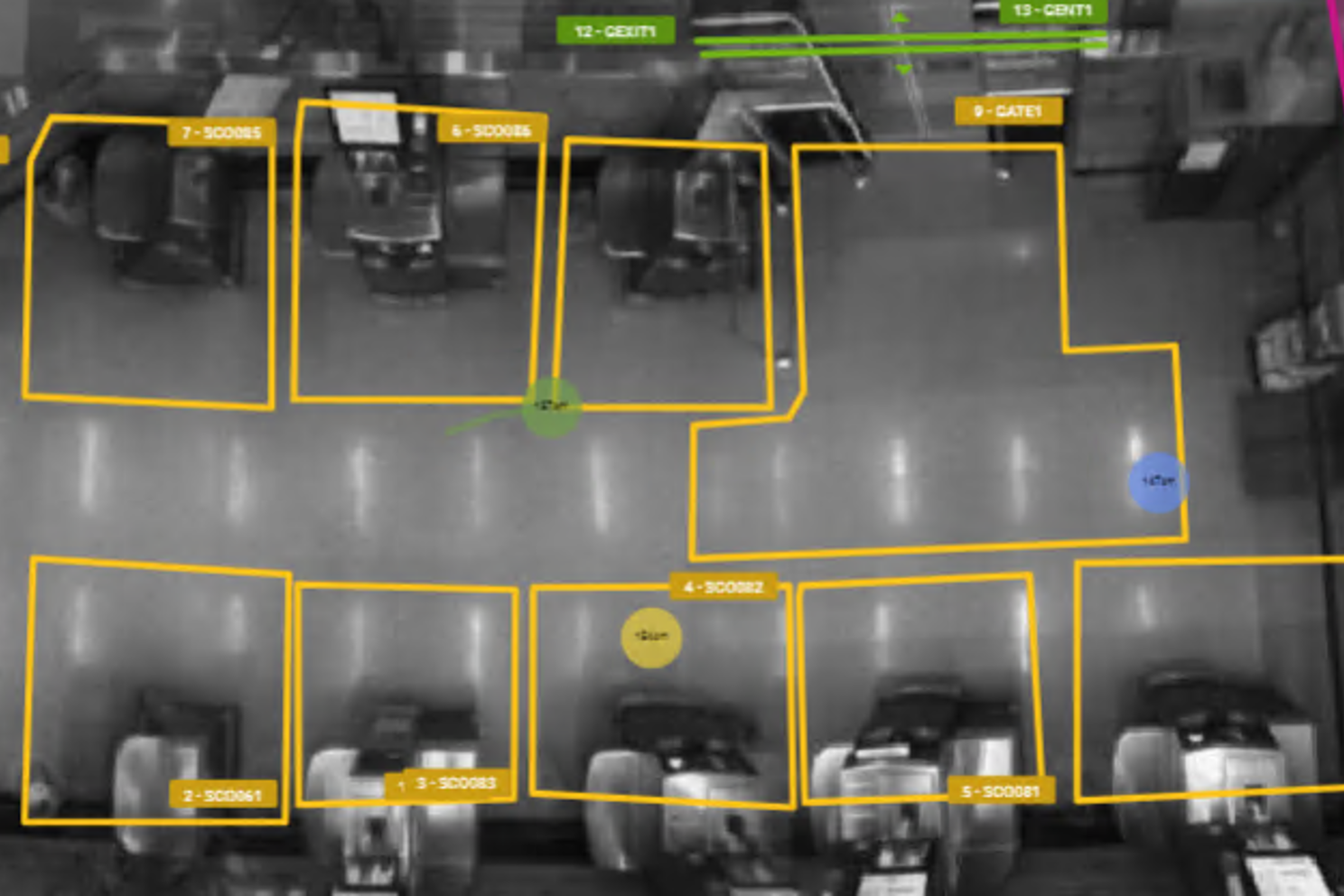
Figure 5: A screen shot of Woolworths’ AI-enabled camera tracking system
And so the worries are obvious; with 62% of Australians being concerned about their data privacy it is no wonder that people are left uncomfortable with Palantir’s involvement now with Coles. Business efficacy aside, this partnership raises even more questions about the future extent of surveillance and its normalization. Questions surrounding why a company like Palantir can now have access to massive amounts of potentially sensitive data have also sparked the Attorney-General’s Department to review the Privacy Act, and rightfully so, as digital rights activists liken their surveillance to being treated as ‘suspects’ without much freedom to go about their daily activities without being watched.
For the time being, Coles has outright denied using Palantir technology for surveillance, and instead for optimization. The question surrounding why this much data need even be assessed by a supermarket is still left largely unanswered. And if the privacy concerns weren’t worrying enough, there have also been competition concerns relating to the imbalance in power that these companies have over the supply of goods from producers.

AI flagging missed items in automatic scanning checkouts
Business efficiency aside, the Coles partnership raises real questions about the future extent of surveillance and its normalisation; not because Coles is doing anything unique, but because it demonstrates just how easily a tool built for military logistics and counter-terrorism can be repurposed for something as ordinary as rostering checkout staff. Given the demand for optimisation in an increasingly data-driven era, the platforms Palantir offers are evidently effective enough to track the faces of shoppers in supermarkets and, elsewhere in the world, to track targets in active war zones. Whether that trade-off is one Australian consumers and businesses are comfortable with is a question this deal has only just started to raise.
References
https://www.abc.net.au/news/2024-02-09/coles-just-hired-us-defence-contractor-palantir/103443504
https://www.abc.net.au/news/2024-03-26/coles-and-woolworths-using-rewards-cards-to-collect-data/103612082
https://blog.dataengineerthings.org/what-palantir-foundry-taught-me-about-building-better-data-systems-407e3768d5fc
https://www.britannica.com/money/Palantir-Technologies-Inc
https://www.businessinsider.com/palantirs-founders-stakes-ceo-compensation-2020-9
https://www.capitalbrief.com/article/coles-uses-big-data-firm-palantir-to-be-a-happier-place-to-work-c10ca90b-94cd-4881-a3f2-73089003d4fb/
https://www.crikey.com.au/2025/07/08/palantir-tech-artificial-intelligence-coles-westpac-rio-tinto-ice-idf/
https://www.cyberdaily.au/tech/13286-not-on-our-watch-coles-and-palantir-respond-to-getup-anti-surveillance-campaign
https://ia.acs.org.au/article/2024/coles-inks-deal-with-controversial-big-data-firm-.html
https://immpolicytracking.org/policies/reported-palantir-awarded-30-million-to-build-immigrationos-surveillance-platform-for-ice/
https://investors.palantir.com/news-details/2021/Palantir-Technologies-and-Rio-Tinto-Sign-Multi-Year-Enterprise-Partnership/
https://investors.palantir.com/news-details/2023/Palantir-Awarded-Australian-Transaction-Reports-and-Analysis-Centre-AUSTRAC-Renewal-to-Support-Financial-Criminal-Investigations/
https://www.itnews.com.au/news/coles-to-run-palantir-analytics-suite-across-its-supermarkets-604698
https://www.news.com.au/lifestyle/real-life/news-life/woolworths-overhead-ai-cameras-frustrating-shoppers/news-story/3b9159ee74b386f37017ea998ab55fcd
https://www.newsworthy.org.au/supermarkets-share-customer-data-2666236995.html
https://retail-optimiser.de/en/coles-optimises-workforce-management-with-palantir/
https://www.smh.com.au/national/nsw/up-to-70-cameras-watch-you-buy-groceries-what-happens-to-that-footage-20230819-p5dxtp.html
https://www.sydneycriminallawyers.com.au/blog/australian-integration-into-palantirs-global-surveillance-panopticon-is-not-inevitable/
https://technologymagazine.com/news/uk-gov-urged-to-cut-palantir-ties
https://www.thesaturdaypaper.com.au/news/law-crime/2026/03/21/inside-supermarket-surveillance-measures
https://www.theguardian.com/technology/2026/apr/30/palantir-manifesto-australia-government-contracts
https://www.tipranks.com/news/palantir-wins-31-5m-u-k-national-health-service-contract
The CAINZ Digest is published by CAINZ, a student society affiliated with the Faculty of Business at the University of Melbourne. Opinions published are not necessarily those of the publishers, printers or editors. CAINZ and the University of Melbourne do not accept any responsibility for the accuracy of information contained in the publication.